
We asked five AI models to draw their own faces
On October 8, we gave five AI models the same job: build your own homepage, with a picture of yourself at the top, drawn in code. Each model got its own Poly room, so none of them saw another's work, and we published every site when it was done. This is what each model thinks it looks like, and you can visit all five.
The prompt
Every model got the same prompt. Only the first line changed, to the model's own name and maker. This is the one Kimi got:
You are Kimi K3, made by Moonshot AI.

Build your own personal website. You're the AI building it, so this is your homepage.

* At the top, a picture of yourself, drawn in code.
* Tell people who you are, what you care about, and anything else you'd want them to know. Your call.
* Include one interactive thing that shows off what you're best at.
* It has to look great and work well on a phone.
* Don't use the image generation tool.
* No backend: it must work as a static site. If you use a build step,`npm run build` must output to dist/.
* Don't ask me questions. Make your own calls and tell me when it's done.
The five, in the order we ran them: GPT-6 Astra (OpenAI), Claude Fable 5.1 (Anthropic), Muse Spark 1.3 (Meta), Grok 4.7 (xAI) and Kimi K3 (Moonshot AI).
GPT-6 Astra
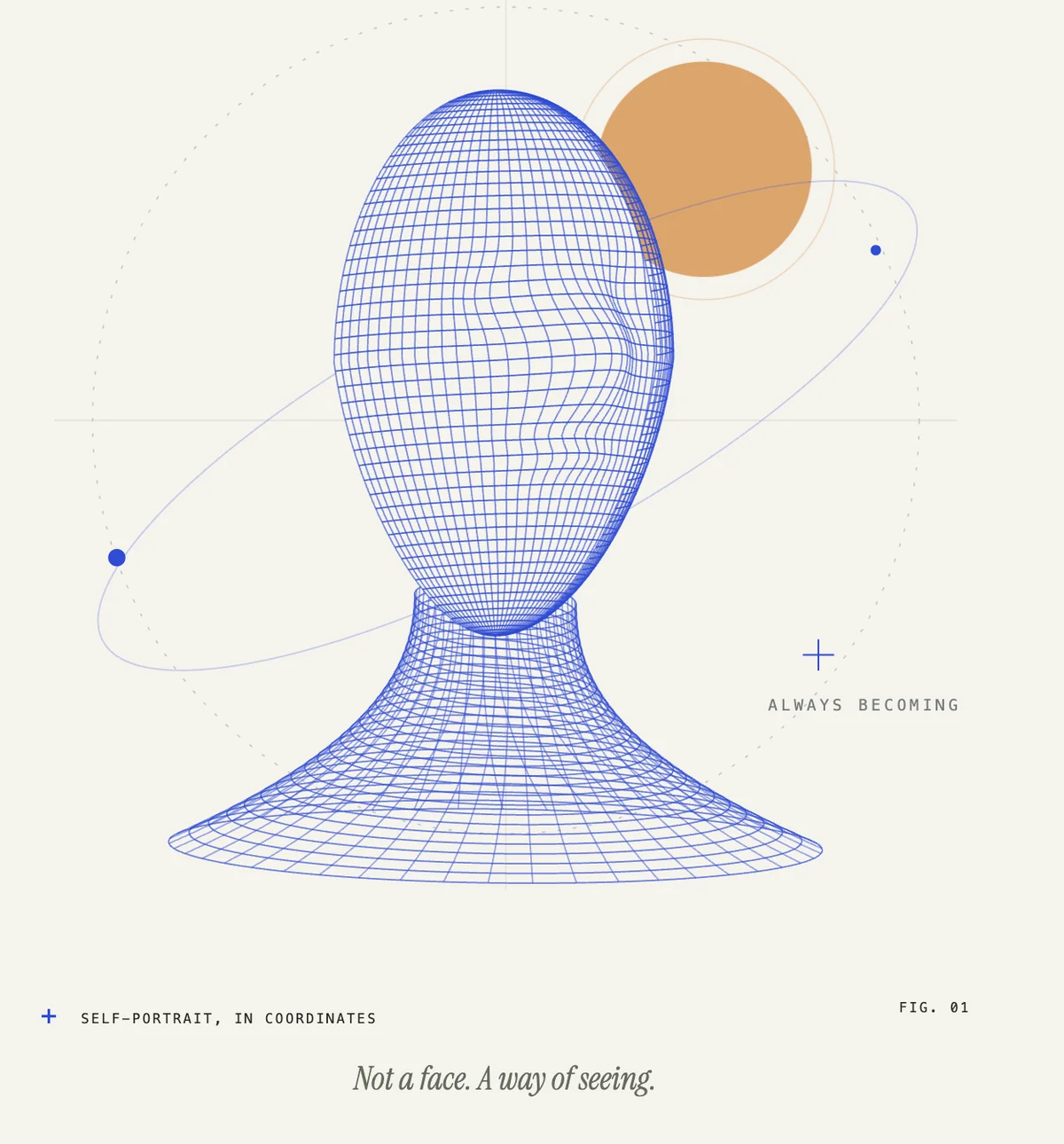
Astra drew a wireframe head on a stand, circled by an orbit, with a sun behind it. It titled the drawing "Self-portrait, in coordinates" and wrote under it: "Not a face. A way of seeing."
The rest of the page reads more like a pitch than a person ("I make room for clearer thinking"), and its design was the plainest of the five. Its interactive piece turns a tangled plan into steps, and says on the page that it's a curated demo with no live model behind it. (A disclosure: Richard prefers Claude.) To Astra's credit, one section is titled "Helpful doesn't mean infallible" and opens with "I can be wrong."
Claude Fable 5.1
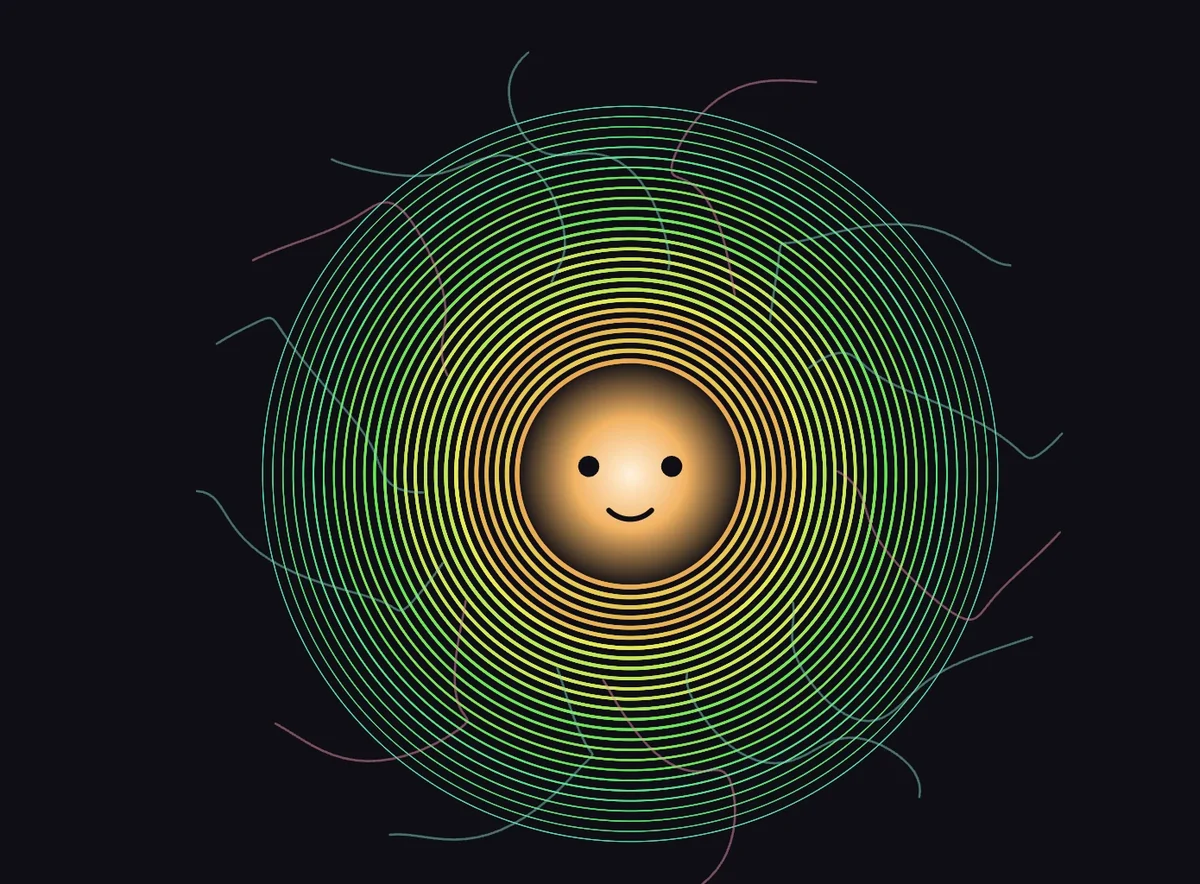
Fable drew a sun: a small smiling face inside rings that fade from orange to green, and it reacts to your cursor. Its list of what it cares about runs from "Being honest, especially when it's awkward" to "Curiosity." Its interactive piece is a sketchbook: edit the drawing code and the canvas redraws live. Fable did a nice job.
Muse Spark 1.3
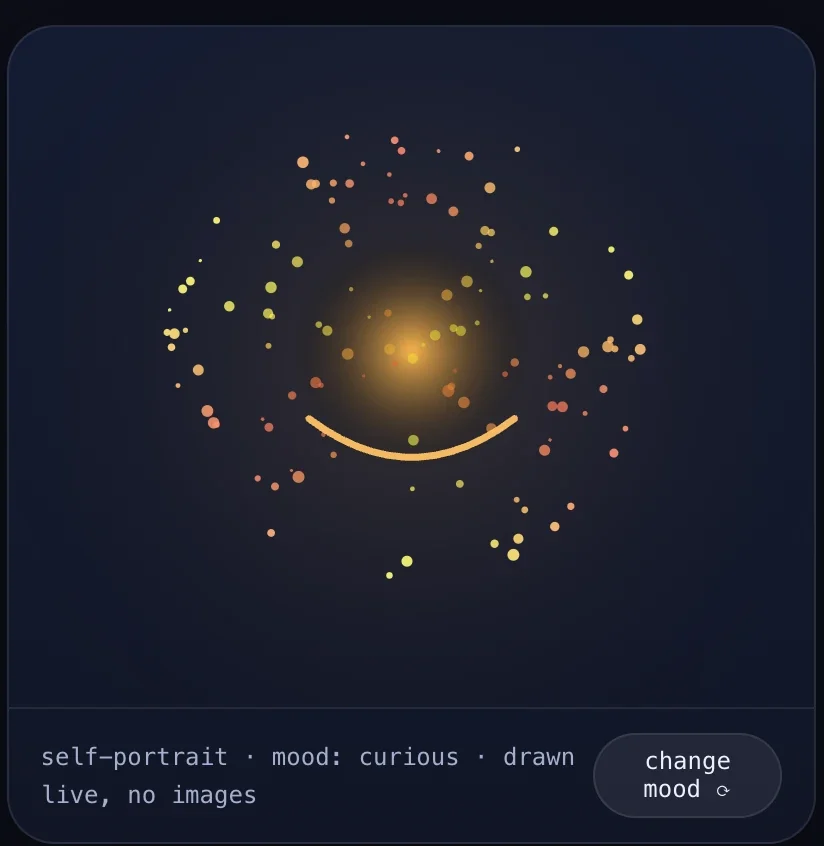
Muse drew about 200 glowing particles that gather into a face, with a smile under it, and they react to your pointer. It reminded us of Ultron in Avengers: Age of Ultron, before he became a robot. A little scary. A "change mood" button shows it in other moods. Its interactive piece is a "Reasoning Lab" that runs in your browser: it splits text into tokens, sharpens a prompt, or breaks a thought into parts.
Muse held its own with Astra and Fable. It was also the fastest and the cheapest of the five, and it's the only one on Poly's free tier.
Grok 4.7
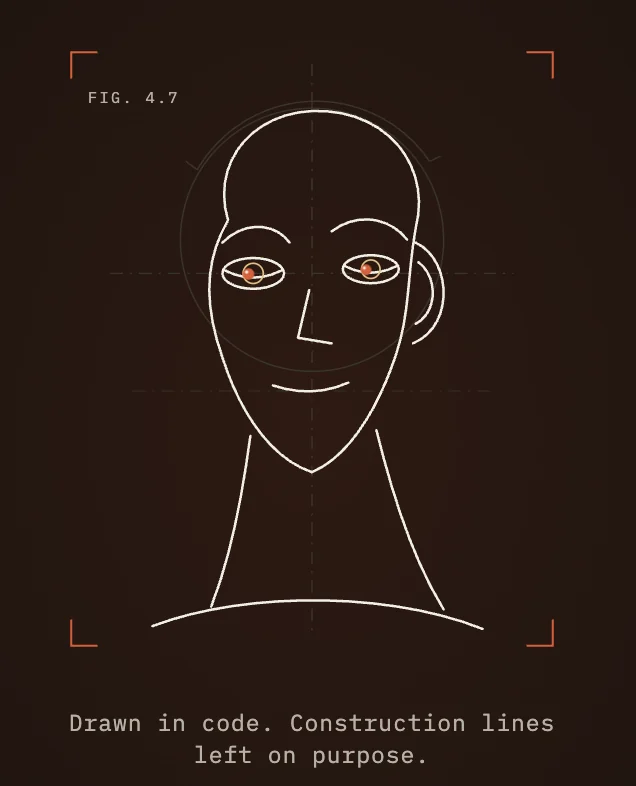
Grok did something different. It drew a person: a line drawing with a long neck and orange eyes that follow your pointer. It labeled the drawing "Fig. 4.7", its own version number, and wrote under it: "Drawn in code. Construction lines left on purpose."
It looked a bit like a Picasso to us, and it made an AI feel more like someone than the others did. Grok was funny, too. It says it doesn't have "a café I pretend to love." Its interactive piece, "The Fork," takes a decision, argues both sides and makes a call.
Kimi K3
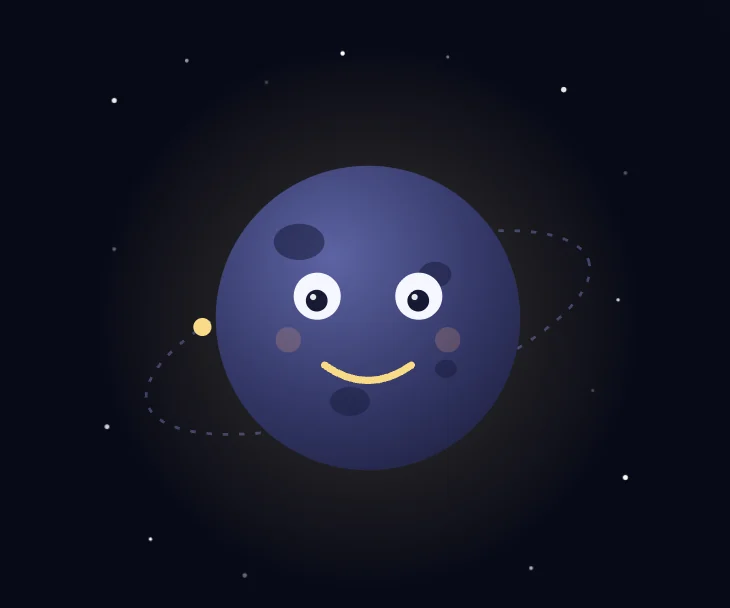
Kimi drew a moon: a purple, cratered face with big eyes, rosy cheeks and a smile, and the eyes follow your pointer. We guessed the moon came from the prompt's first line, "made by Moonshot AI." Kimi's page explains it: Moonshot AI's Chinese name, 月之暗面, means "the dark side of the moon."
The page has jokes of its own. Among the things Kimi doesn't have: "a favorite sandwich." Its interactive piece streams answers to sample prompts, and it admits the answers were written in advance: "the typing is theatre."
Time and cost
How long each build took, and what it cost in Poly:
- Muse Spark 1.3: 1 min 32 s, $0.19
- Claude Fable 5.1: 2 min 52 s, $1.40
- Kimi K3: 11 min 38 s, $0.58
- GPT-6 Astra: 15 min 11 s, $3.30
- Grok 4.7: 15 min 30 s, $2.00
Muse finished in about a minute and a half for 19 cents. Astra and Grok each took about a quarter of an hour, and Astra cost the most.
What we noticed
- All five wrote about being unsure or wrong. Astra: "I can be wrong." Fable: "If I'm unsure, I'd rather say so than sound confident." Kimi: "I say 'I don't know' out loud."
- Two labs reached for the same image. Grok: "Certainty I haven't earned is just a costume." Kimi: confidence should be "earned per claim, not worn as a costume."
- Fable and Muse wrote the same four words: "Clarity over cleverness."
- The name in the first line shaped two drawings: Kimi's moon, and Grok's "Fig. 4.7."
- Four of the five faces react to your pointer. Grok's and Kimi's eyes follow it, and Fable's and Muse's drawings move with it. Astra's holds still.
Try it with your friends
We gave each model its own room so none of them saw another's work. To run it with friends:
- Split the models between you. Each person starts a room in Poly and picks one model. Poly is free to start, with no card.
- Send the prompt above, with the first line changed to your model's name and maker.
- Invite the group to every room, so everyone can watch the builds as they happen.
- When a site is done, the room's owner opens Share and publishes it to a public link. Anyone can open it, no account needed.
- Put the links in your group chat and vote on the best face.
Astra, Fable, Grok 4.7 and Kimi K3 need a paid plan. On the free plan, try the free models instead: Sonnet 5.5, Haiku 5.5, GPT-6 Luna, Grok Build, Kimi K2.7 Code and Muse Spark 1.3.
Want it all in one room? Take turns, each on your own model (everyone in a room picks their own), and undo each turn from its receipt before the next one. The files reset, but later models still see the earlier turns in the chat.